
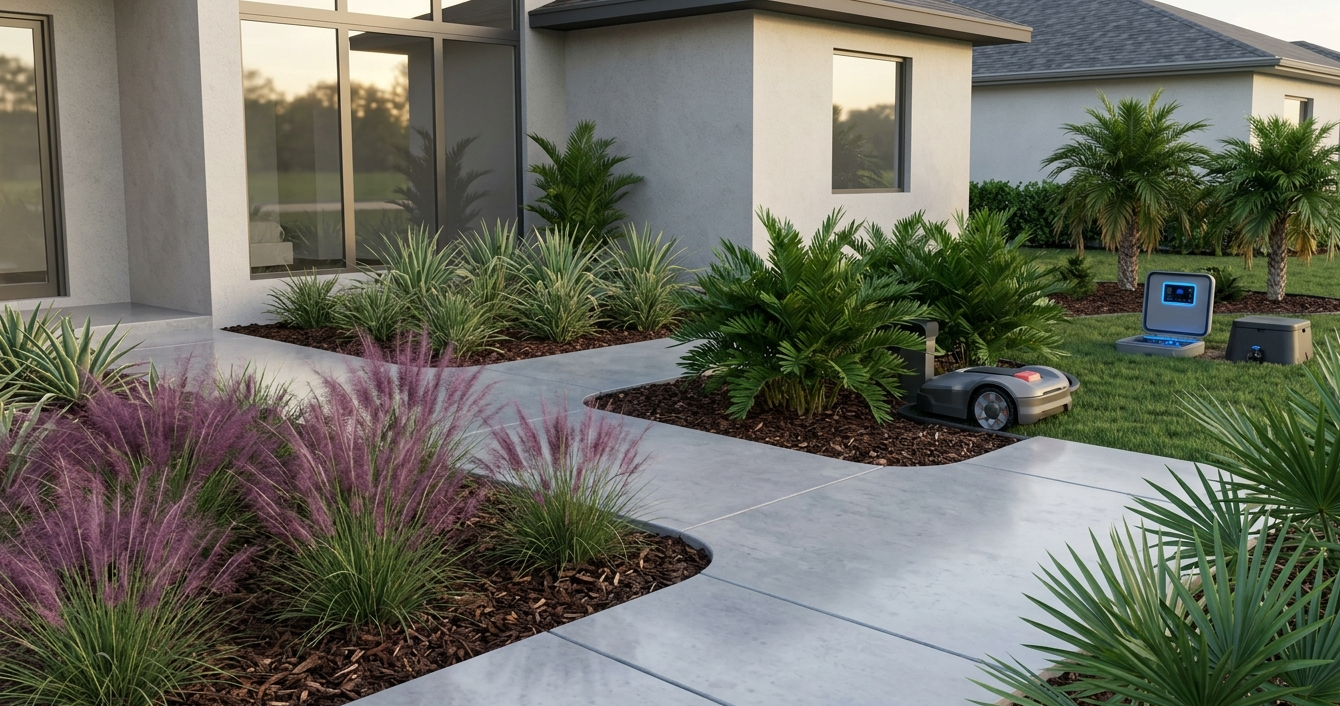
Florida landscapes are evolving fast. Rising water costs, shifting climate patterns, and growing demand for properties that look polished without constant upkeep are pushing both property owners and commercial managers to rethink their approach.
The most impactful landscaping decisions this year are not just about appearance. They are about efficiency, sustainability, and building outdoor spaces that hold their value across every season. Here is what is defining the direction of Florida landscaping in 2026.
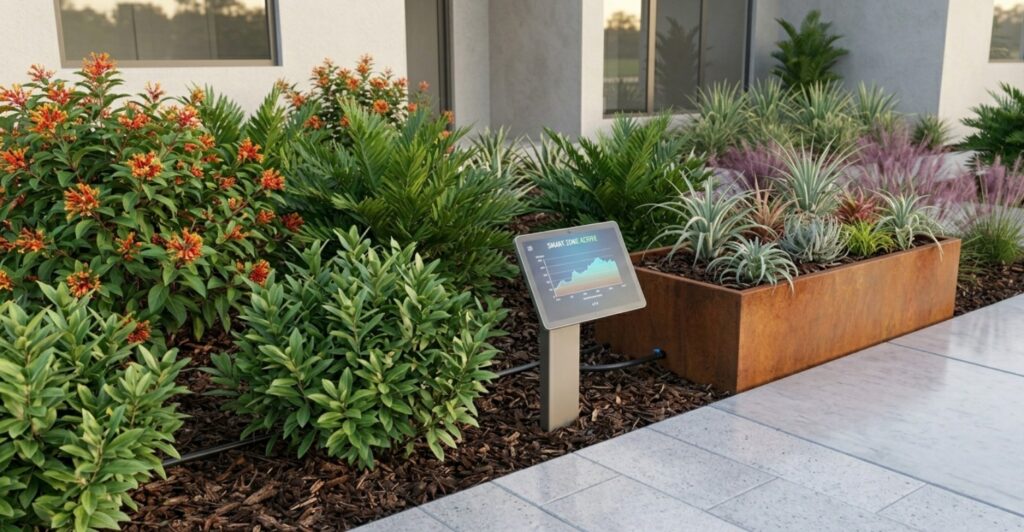
Smart Irrigation Has Moved from Upgrade to Expectation
Across Florida properties, the shift toward native and climate-adapted plants is accelerating well beyond what many predicted even two years ago. Non-native tropical species can create visual impact, but they often demand consistent water, fertilizer, and replacement cycles that add cost and labor over time.
Florida native species, including Muhly grass, Firebush, Coontie, Simpson’s Stopper, and Florida Privet, have adapted naturally to the state’s soil types, rainfall cycles, and temperature ranges. Once established, they perform through wet and dry seasons with minimal intervention and significantly less supplemental irrigation.
A trend gaining clear momentum this year is pollinator-focused commercial landscaping. HOA communities, office campuses, and retail properties are intentionally incorporating flowering native species that support local bee and butterfly populations. This is driven partly by genuine environmental interest and partly by a growing awareness that sustainable landscaping is increasingly a factor in how commercial properties are perceived and valued.
There is also a practical design benefit that often goes unmentioned. Native plants that are well-suited to their environment do not need to be replaced as often. That reduces both maintenance frequency and the cost of keeping a landscape looking consistent and healthy.
Low-Maintenance Yard Design Is Redefining What "Polished" Looks Like
The most desirable commercial landscapes right now are not the most elaborate ones. They are the ones that maintain a clean, professional appearance with the least amount of recurring effort. That shift is reshaping how landscape installations are being planned from the ground up.
Mulched beds with defined borders are replacing high-maintenance ground covers. Permeable hardscaping is reducing turf coverage in high-traffic zones while improving stormwater drainage. Plant spacing is being planned around mature growth dimensions from the outset, which reduces how often plants need to be cut back, reshaped, or replaced.
Turf selection is part of this conversation as well. St. Augustine grass remains the most widely used variety across Florida, but Bahia and Zoysia are being specified more often in applications where drought tolerance and lower input are priorities. Some Florida developments are also responding to reduced turf mandates being adopted at the municipal and community level, which is encouraging property managers to explore design approaches that rely less on traditional lawn coverage overall.
Proactive maintenance scheduling is also evolving. Rather than reacting to problems once they become visible, more commercial property managers are working with landscape professionals on structured programs that include timed fertilization, pest monitoring, soil health checks, and consistent trimming. A landscape maintained proactively stays consistent. One that is only addressed reactively tends to fluctuate between overgrown and stressed.
Tree Care and Climate-Resilient Planning Go Hand in Hand
Florida’s tree canopy does more than add visual appeal. It provides meaningful shade, reduces heat retention on paved surfaces, and adds measurable value to commercial properties. Current commercial landscaping strategies reflect a growing emphasis on tree health as a long-term asset rather than an afterthought.
Routine professional trimming for clearance, structural balance, and storm preparation remains essential. Florida’s hurricane season creates real risk for trees that are overgrown, improperly pruned, or showing signs of internal decay. Climate-resilient landscape planning in 2026 increasingly incorporates tree assessments as part of broader property evaluations, identifying risk factors before storm season rather than after.
Improper trimming continues to be one of the most common and costly errors in Florida property management. Over-pruning, flush cuts, and excessive canopy removal all weaken tree structure and create long-term problems that are difficult and expensive to reverse.
Installation Quality Determines Long-Term Performance
Ready to Build a Smarter Florida Landscape?
FAQs:
Q1. What is the best irrigation system for Florida’s climate in 2026?
Smart irrigation systems with weather-based controllers and soil moisture sensors are the top choice for Florida properties. They automatically adjust based on real-time conditions, cutting water waste while keeping lawns and plantings consistently healthy year-round.
Q2. Which native plants are best for low-maintenance Florida landscaping?
Florida native species like Muhly grass, Firebush, Coontie, Simpson’s Stopper, and Florida Privet perform well with minimal water and upkeep. They are naturally adapted to local soil and rainfall patterns, making them ideal for sustainable commercial landscape designs.
Q3. How can commercial properties in Florida reduce landscape maintenance costs?
Switching to native plants, installing smart irrigation, and following a proactive maintenance schedule are the most effective ways to lower costs. These strategies reduce water usage, limit plant replacement cycles, and keep your property looking clean with fewer reactive service visits.
Q4. Why is professional tree trimming important for Florida commercial properties?
Florida’s hurricane season makes professional tree trimming essential. Overgrown or improperly pruned trees are significantly more vulnerable to storm damage. Regular trimming improves structural stability, reduces liability risks, and keeps your property’s canopy healthy and safe year-round.
Contact Us
Call Us: 561-372-8580
Email Us: INFO@MOWITLAND.COM
