
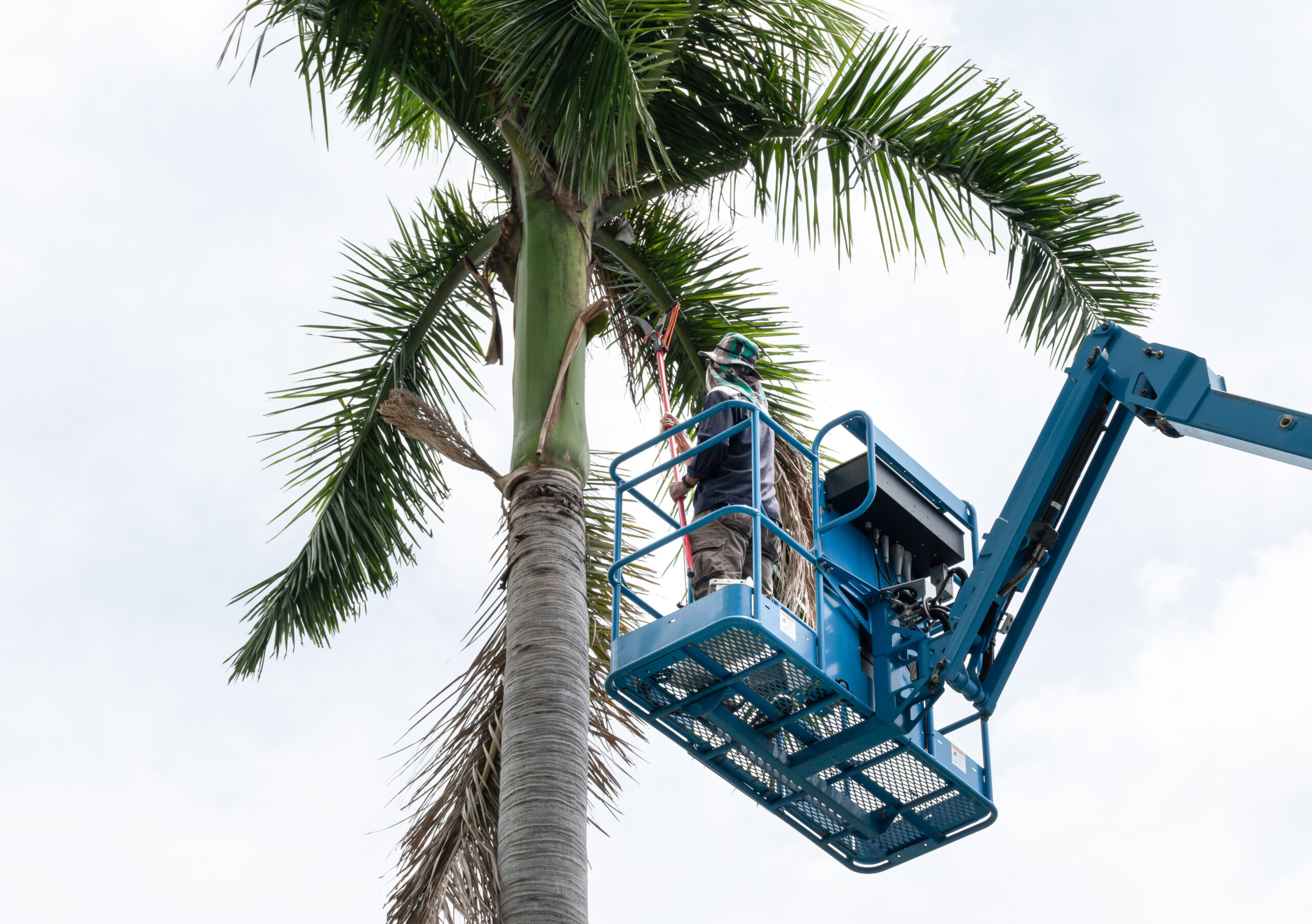
Palms define the look of Boca Raton. They line driveways, frame building entrances, and fill medians across Palm Beach County. They also drop heavy fronds, scatter fruit across parking lots, and turn into flying debris when a storm rolls in. Trimming them looks simple, yet it is one of the most commonly botched jobs in South Florida.
If you manage a property and have typed tree trimming boca raton fl into a search bar, this guide is for you. It explains when palms need attention, what a proper cut looks like, which habits damage the tree, and how to decide between doing the work yourself and bringing in a trained crew.
Why Palms Need Different Care Than Other Trees
A palm is not a tree in the way an oak or a maple is. It has no true branches, no bark that thickens over the years, and no ability to seal a wound the way a hardwood does. Instead, a palm grows from a single bud at the top of the trunk, often called the heart or the crown. Every new frond comes from that one point. If the bud is cut, crushed, or burned, the palm does not grow a replacement. It dies.
That one fact changes how trimming should be done. With a hardwood, a pruner shapes growth by choosing which branches stay. With a palm, trimming is closer to housekeeping: removing fronds that are already dead or about to fall, clearing seed stalks, and keeping the crown clean. The goal is a safe, tidy palm, not a sculpted one.
Palms also store nutrients in their fronds. A green frond is still feeding the tree, and a yellowing frond may be moving nutrients back into the trunk before it dies. Cutting fronds too early costs the palm energy it needs to recover from heat, drought, or storm damage. This is why Florida extension specialists generally recommend a light touch.
What Palm Trimming Actually Involves
Good palm trimming has a short list of jobs. Knowing what each one is helps you judge whether a crew did the work properly or simply cut everything in sight.
Removing Dead and Drooping Fronds
The main task is taking off fronds that are fully brown and dead, along with older fronds that hang well below the level of the crown. A simple rule many arborists use is to imagine the crown as a clock face and leave the fronds that sit above the 9 o’clock and 3 o’clock positions. Fronds below that line are usually the oldest and are on their way out. The cut is made close to the trunk without slicing into the trunk itself, because wounds on a palm trunk never heal over.
Clearing Flower and Fruit Stalks
Many palms common in Boca Raton, including queen palms, Canary Island date palms, and foxtail palms, send out large flower stalks that turn into heavy clusters of fruit. Ripe fruit drops onto sidewalks and parking spaces, stains pavement, attracts rodents and insects, and creates a slip hazard for anyone walking underneath. Removing the stalks before the fruit ripens saves a great deal of cleanup later and keeps the area safer.
Cleaning the Trunk and Crown
Some palms, such as cabbage palms and Canary Island date palms, hold on to old frond bases long after the fronds are gone. These stubs collect leaf litter, moisture, and small plants, and they can shelter pests. Once the bases are loose or dead, a trained worker can remove them to leave a clean trunk and give the crown room to breathe. Bases that are still firmly attached should be left alone, since forcing them off tears the trunk.
When to Trim Palms in Boca Raton
Timing matters as much as technique. South Florida’s warm climate means palms grow almost year-round, so there is no single “dormant season” the way there is up north. Instead, timing follows the weather calendar.
Late Spring, Before Hurricane Season
Hurricane season runs from June 1 through November 30, which makes late spring the best window for the main yearly trim. Dead fronds and heavy fruit stalks turn into projectiles in strong wind, and a crown loaded with loose material puts nearby cars, windows, and people at risk. Scheduling tree trimming boca raton fl work in April or May clears that material out before the first named storm of the year. It also gives you time to spot problems, such as a leaning trunk or a crown that looks thin, while there is still room in your maintenance budget and calendar to deal with them.
After a Storm
Once a storm passes and it is safe to go outside, walk the property and look up. Broken or hanging fronds should come down quickly because they can fall without warning. Resist the urge to strip the crown completely. Palms that lose a few fronds usually recover on their own, while palms that are over-pruned during recovery often struggle. If the trunk is leaning more than before, the crown looks split, or the bud appears damaged, have a professional look at it before anyone climbs or cuts.
During Cold Snaps
Boca Raton rarely sees hard freezes, but a cold night does happen most winters. Fronds help insulate the bud, so avoid heavy trimming right before a cold snap. Wait until temperatures settle, then remove anything that is clearly dead.
How Often to Trim
Most palms do well with one trim per year. Fast-growing or heavy-fruiting types, like queen palms and date palms, often need a second visit in the fall. Slower species, such as sabal palms, can sometimes go longer between cuts. A good crew adjusts the schedule to the species on your property rather than following one calendar for every tree.
Signs a Palm Needs Trimming
You do not need to wait for a scheduled visit if you notice any of the following. These are the most common signals that a palm is ready for attention:
- Brown, dead fronds hanging below the crown
- Flower or fruit stalks forming over walkways, parking spaces, or entrances
- Fronds touching roofs, signs, light fixtures, or building walls
- Broken or bent fronds left behind after strong wind
- Dense, overgrown crowns where rodents or other pests could nest
- Fronds blocking the view at a driveway exit or a business sign
If you see yellow or orange frond tips, or a crown that looks unusually thin, do not just cut and move on. Those patterns can point to a nutrient problem or disease, and the right fix is different from a trim.
How to Trim a Palm Safely
Palm work looks easy from the ground. Up close, it involves heavy, sharp, and unpredictable material, often at height. A few habits separate safe work from accidents.
Use the Right Tools and Keep Them Clean
A pole saw, a sharp hand saw, and loppers cover most trimming on small and medium palms. Dull blades tear the trunk and leave ragged cuts. Clean blades matter just as much. Some palm diseases, including Fusarium wilt in Canary Island date palms, can travel from tree to tree on contaminated tools. Wiping or dipping blades in a disinfectant, such as rubbing alcohol or a diluted bleach solution, between palms is a simple step that protects the rest of the property.
Make Clean Cuts in the Right Place
Cut dead or drooping fronds close to the trunk, leaving a short stub where the species calls for it, and never carve into the trunk tissue. Cut flower and fruit stalks at their base. Keep the tool well away from the bud. A cut that reaches the crown can kill the palm, and the damage may not show for weeks.
Protect Yourself and Everyone Nearby
Fronds on a mature palm can weigh a surprising amount, and a falling frond can hurt someone badly. Wear safety glasses, gloves, a hard hat, and long sleeves. Rope off the area below the work, especially near entrances or parking spaces. Use a stable ladder on firm ground or a lift for anything taller than you can reach from the ground, and never work alone at height.
Common Mistakes That Hurt Palms
Some of the most common trimming habits in South Florida actually shorten a palm’s life. Watching for them helps you hold contractors to a good standard.
The “Hurricane Cut”
This is the practice of cutting a palm back until only a small tuft of fronds is left on top, giving it a pineapple shape. Many people believe it helps palms survive wind. It does not. Research from University of Florida horticulture specialists shows that over-pruned palms grow more slowly, lose stored nutrients, and become more prone to stress and disease. A palm with a full crown handles wind better than a stripped one.
Climbing Spikes
Spikes, also called gaffs, are fine for removing a dead tree but harmful on a living palm. Each puncture leaves a wound in the trunk that invites decay and insects. Crews working on living palms should use lifts, ladders, or ropes instead.
Removing Green Fronds
Cutting healthy green fronds for looks removes a food source. A palm that has been stripped repeatedly may develop a thin, weak neck near the top, which can snap in storm winds. If a frond is still green and sitting above the horizontal line, it should stay.
Ignoring Signs of Disease
Common trouble signs include fronds that yellow or bronze from the bottom up, fruit dropping early, flower stalks that blacken, and a crown that leans or collapses. Lethal bronzing, spread by an insect, and Fusarium wilt both show up in South Florida. Trimming will not cure either, and delaying a diagnosis can cost you the palm and put neighboring trees at risk.
Palm Trimming for Commercial Properties
Commercial sites bring a different set of concerns from a single backyard. More people walk under the palms, there are more vehicles to protect, and the property reflects directly on the business.
Liability and Public Safety
A falling frond or a cluster of ripe fruit near a storefront can lead to an injury claim, a damaged car, or a bad first impression. Property managers, HOA boards, and retail owners often schedule tree trimming boca raton fl visits as part of a regular maintenance program so palms are checked on a set rhythm instead of only after a complaint. Keeping written records of when each palm was trimmed and what was found also helps if an insurance question ever comes up.
Power Lines
Palms often grow close to power lines along streets and parking areas. As a general safety rule, people and equipment should stay at least 10 feet away from energized lines, and work closer than that should only be done by qualified line-clearance workers. If fronds are touching a line, do not attempt to cut them. Call the utility or a professional who is trained for the job.
DIY or Professional: How to Decide
Homeowners with a short palm they can reach from the ground, with no wires, no fruit stalks, and no signs of disease, can often handle a light trim with a pole saw and the right protective gear. Once a palm is taller than a ladder can safely reach, sits near power lines, or carries heavy fruit clusters, the risk goes up fast. Add commercial foot traffic, and professional help becomes the safer choice for almost everyone.
There is also the matter of diagnosis. A trained eye can tell the difference between a normal old frond and an early warning sign of disease. Many people only notice that second kind of problem after the palm is already in decline.
How to Choose a Trimming Company in Boca Raton
Not every crew that owns a chainsaw knows how to work on palms. A few questions help sort out who does the job well:
Are they insured?
Ask for proof of general liability insurance and workers’ compensation coverage. If a worker gets hurt on your property without coverage, the cost can land on you.
Do they have trained staff?
An ISA Certified Arborist on the team is a good sign, since the certification covers tree biology, safe work practices, and diagnosis.
How do they work on living palms?
The right answer includes lifts, ladders, or ropes, and no climbing spikes. Ask whether they follow the 9 and 3 o’clock guideline instead of cutting everything below the crown.
Do they clean their tools?
A crew that sanitizes blades between palms takes disease seriously.
Is debris removal included?
Palm fronds are bulky. Confirm in writing whether hauling is part of the price.
When you compare quotes for tree trimming boca raton fl service, look at what each one covers, not only the total. A low price that skips cleanup, insurance, or proper technique can cost more in the long run.
Frequently Asked Questions
How much does palm trimming cost?
Price depends on the number of palms, their height, the species, how easy it is to reach them, and whether fruit removal and hauling are included. A written quote after an on-site visit is the most reliable way to get an accurate number.
Do I need a permit to trim a palm in Boca Raton?
Routine trimming usually does not require one, but removing a tree can. Rules differ between cities, HOAs, and commercial properties, so check with the City of Boca Raton or your association before any work that goes beyond ordinary trimming.
Can trimming kill a palm?
Yes. Damage to the bud, heavy over-pruning, and contaminated tools can all lead to decline or death. This is the main reason proper technique matters.
Should I cut yellow fronds?
Not always. Yellow or orange fronds may signal a nutrient shortage, such as low potassium or manganese, and removing them can make the problem worse. Treat the cause first, then remove fronds once they are fully brown.
Book a Palm Trimming Visit
Palms that are trimmed on time and trimmed correctly look better, drop less debris, and handle storm season with fewer problems. If you manage a business, an office park, a shopping center, or an HOA community and want a clear plan for the palms on your property, the team at Mow-It Landscaping can walk the site, check each tree, and give you a written quote.
Book your free estimate or contact our team through our website, and tell us how many palms you have and where they are located. We will take it from there.
