
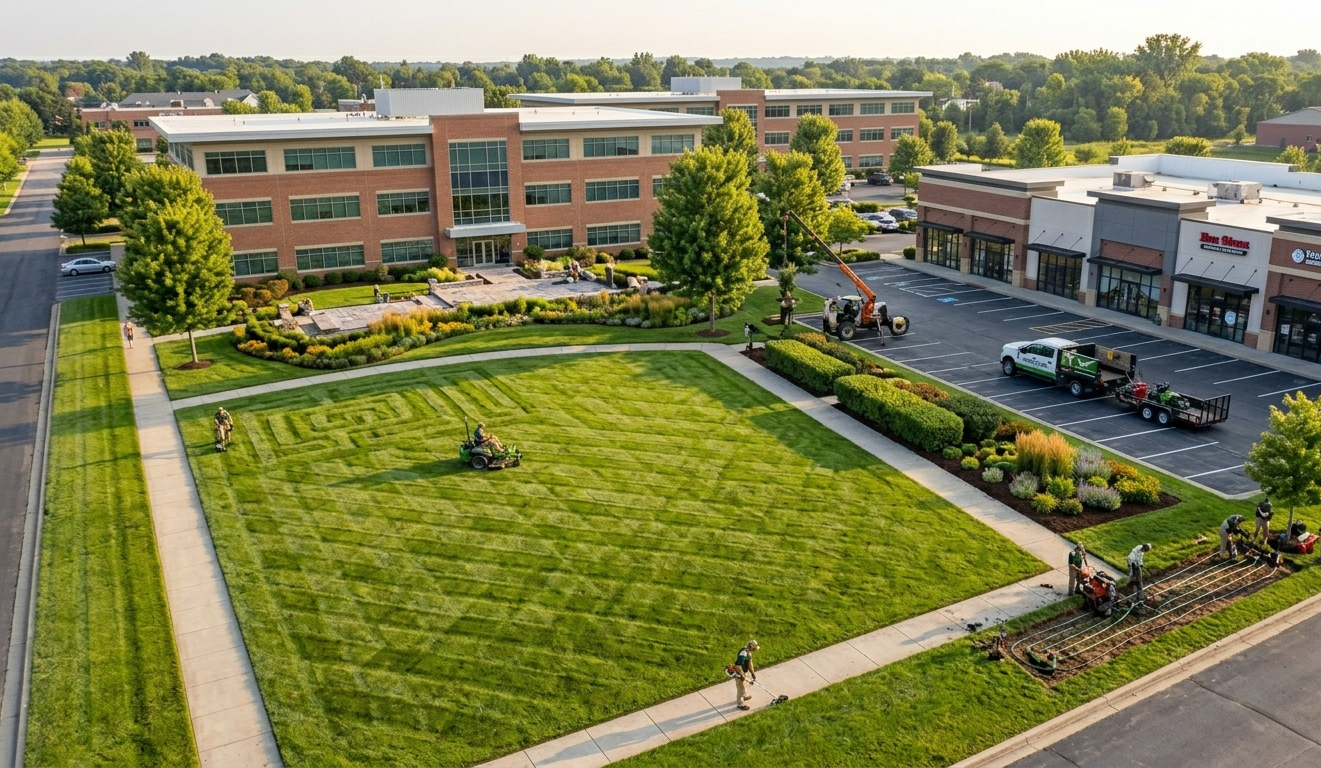
A commercial property’s exterior often shapes the first impression before customers, tenants, visitors, or employees enter the building. Clean lawn edges, healthy trees, balanced plantings, and well-planned outdoor features can make a space feel cared for, functional, and more valuable. The right commercial landscaping projects do more than improve appearance. They help support property value, strengthen brand perception, improve functionality, and create a more professional environment.
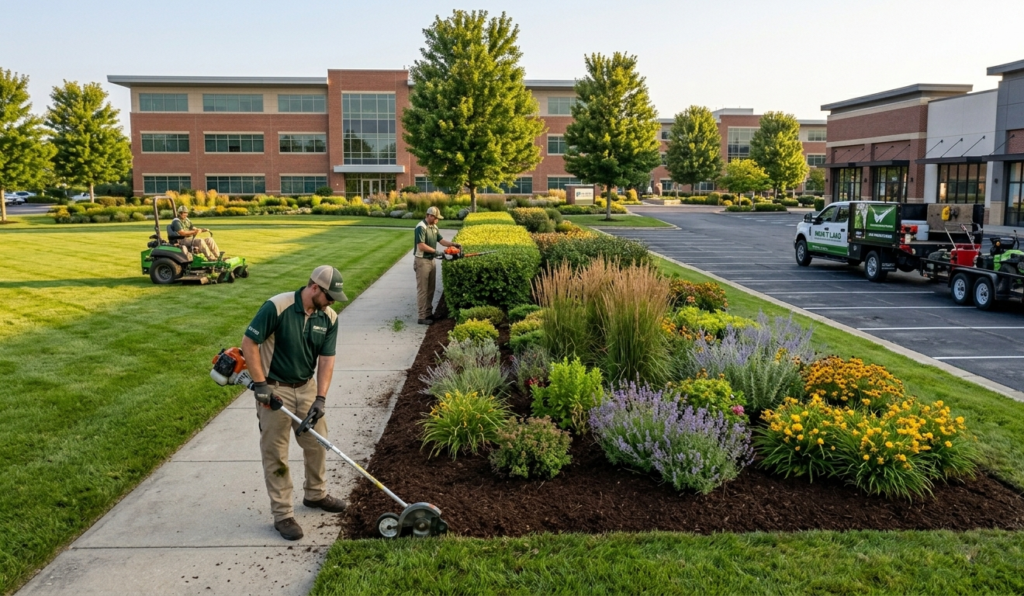
Start With a Clean and Well-Maintained Landscape
One of the most effective landscaping projects is also one of the most practical: routine landscape maintenance. Overgrown shrubs, uneven grass, weeds, and neglected beds can make even a strong property look unfinished.
A well-maintained landscape creates structure. Regular mowing, edging, trimming, weeding, and cleanup help lawns and planting areas look intentional. For commercial properties, this matters because the exterior reflects the quality of the business or facility. It also helps keep entrances, walkways, parking areas, and common spaces clean, accessible, and visually consistent for everyone who visits or uses the property.
Maintenance also protects value by preventing small issues from becoming larger problems. Overgrowth can crowd walkways, block signage, hide lighting, and affect plant health. Consistent care keeps the property clean, accessible, and visually balanced.
Upgrade Plant Beds for Better Visual Impact
Fresh, defined plant beds can quickly improve curb appeal. Mulch, seasonal plants, shrubs, and clean bed borders help add depth and color to the landscape. This type of project works especially well for office complexes, retail centers, healthcare facilities, and multifamily communities, where upgraded planting beds can help reinforce a polished, professionally maintained appearance.
A strong planting design should match the property’s use and maintenance needs. Low-maintenance shrubs, hardy plants, and well-spaced greenery can create a finished look without constant replacement. Mulch also helps retain moisture, reduce weeds, and give beds a clean appearance.
For best results, plant beds should be designed with balance in mind. Too many plants can look crowded, while too few can make the area feel bare. A professional layout helps create the right mix of color, texture, and structure.
Improve Tree Health and Shape
Tree care is one of the most valuable landscaping projects for both curb appeal and property safety. Healthy, well-shaped trees add shade, character, and a mature look to outdoor spaces. Poorly maintained trees, however, can create hazards and reduce the appearance of the property.
Tree trimming helps remove dead, weak, or overgrown branches. It can also improve visibility, protect nearby structures, and encourage healthier growth. When trees are properly shaped, they frame the property rather than overwhelming it.
Regular tree care is especially important for properties with high foot traffic, parking lots, walkways, outdoor seating areas, or customer-facing common areas. It helps maintain a cleaner look while reducing avoidable risks.
Add or Improve Irrigation Systems
A healthy, professional-looking landscape depends on proper watering. Irrigation projects can help protect lawns, shrubs, trees, and planting beds from stress caused by inconsistent moisture. When a system is designed well, it supports healthier growth while reducing waste.
Efficient irrigation helps keep grass green, plants vibrant, and soil conditions more stable. It can also save time compared to manual watering. For commercial properties and high-visibility facilities, irrigation is often essential for maintaining a consistent appearance.
Updating older irrigation systems can also improve performance. Broken sprinkler heads, uneven coverage, leaks, or poor scheduling can lead to dry spots, overwatering, and higher maintenance needs.
Invest in Landscape Installation Projects
Landscape installation can transform underused or outdated outdoor areas. New sod, shrubs, trees, hardscape accents, decorative beds, and property enhancements can give a space a more organized and professional appearance.
Installation projects should be planned around function as much as appearance. A strong landscape design considers foot traffic, sunlight, drainage, building style, maintenance needs, and long-term growth. This helps the finished result look natural and stay manageable over time.
For commercial facilities seeking to enhance tenant experience, visitor perception, or curb appeal, landscape installation projects can significantly improve the appearance and functionality of outdoor spaces.
Keep Outdoor Spaces Consistent Year-Round
Curb appeal is not a one-time project. The best results come from combining improvement projects with consistent care. A property may look polished after installation, but without maintenance, trimming, irrigation checks, and seasonal attention, its appearance can decline quickly.
A well-planned landscape should stay neat, healthy, and functional through changing conditions. This is where professional guidance can make a difference. The right team can identify what needs attention, recommend practical upgrades, and maintain the property with care.
FAQs:
Q. What landscaping projects add the most curb appeal?
Projects such as lawn maintenance, fresh mulch, clean plant beds, tree trimming, edging, and landscape installation can create a noticeable improvement. These updates help the property look cleaner, more organized, and professionally maintained.
Q. Can landscaping projects help improve property value?
Yes, well-planned landscaping projects can support property value by improving appearance, usability, and outdoor conditions. Healthy lawns, maintained trees, proper irrigation, and attractive planting areas can make a commercial property more appealing to tenants, customers, employees, and visitors while supporting long-term property value.
Q. How often should landscaping maintenance be done?
The right schedule depends on the size of the property, season, grass growth, plant types, and overall landscape design. Most commercial properties benefit from routine mowing, trimming, bed care, irrigation checks, and seasonal cleanup to keep the exterior looking consistent.
Q. Why is irrigation important for landscaping?
Irrigation helps maintain healthy grass, trees, shrubs, and planting beds by providing consistent watering. A properly working irrigation system can reduce dry spots, prevent overwatering, and support a healthier landscape throughout the year.
